
Yes, CPCs are generally rising across most industries, driven by more competition, tighter auctions, and a shrinking pool of organic clicks that pushes commercial intent into paid results. Before raising bids, focus on conversion efficiency and measurement. Average CPC climbed to roughly $5.42 in 2025, and conversion rates improved at the same time, so the accounts holding up are the ones fixing tracking and targeting first.
TL;DR:
- CPCs are rising due to increased auction competition, smaller organic click volumes, and broader industry inflation, with average CPC reaching about $5.42 in 2025.
- Most CPC spikes are caused by auction mechanics, especially when competitors close in Ad Rank, and pre-auction factors like AI-powered organic rankings shrink available clicks.
- Improving conversion tracking and targeting can help offset CPC increases, while narrowing keywords, adding negatives, and focusing on high-intent queries reduce wasted spend.
- Monitoring CPC alongside conversion rate, CPA, and ROAS is essential, as rising CPC with stable or improving CPA indicates healthy account performance.
- Regular audits of tracking, account structure, keywords, and landing pages are crucial to identify whether market dynamics or account issues cause CPC increases.
Table of Contents
- What drives rising CPCs: auction mechanics and pre-auction forces
- Benchmarks: recent CPC and conversion rate trends to compare against your account
- High-impact tactics to limit CPC impact and protect ROI
- What to measure and how to verify the changes are working
- Senior-led audit checklist: quick checks to find the cause
- How we prioritize fixes and when to bring in senior help
- Sources
- FAQ
What drives rising CPCs: auction mechanics and pre-auction forces
Actual CPC is set by auction mechanics, not a price list. Google Ads Help explains that your actual CPC is tied to the Ad Rank of the competitor just below you, so when several advertisers have similar quality scores and bids, actual CPCs climb even without anyone trying to overpay.
A lot of the pressure now starts before the auction even happens, as discussed in the role of AI in search rankings powering organic growth Role of AI in Search Rankings: Powering Organic Growth. Analysis from Search Engine Land shows AI overviews and shrinking organic click volume concentratess commercial searches into a smaller set of paid clicks, meaning fewer available clicks absorb the same (or growing) advertiser demand.
Several forces compound on top of that:
- More advertisers are entering auctions as AI creative tools lower the cost of launching campaigns.
- Seasonal budget surges and broader inflation push bids up industry-wide.
- Weak quality signals (poor CTR, slow landing pages) force advertisers to bid higher for the same position.
- Clean automation inputs, like accurate conversion values, can offset some of this pressure by improving Ad Rank efficiency.
Pro Tip: Before touching bids, check whether your quality score has slipped. A drop there often explains a CPC spike better than competition does.
Benchmarks: recent CPC and conversion rate trends to compare against your account
Average Google Ads CPC rose to roughly $5.42 in 2025, and the majority of industries saw year-over-year increases. That benchmark matters less as an absolute number and more as a direction: if your account’s CPC trend outpaces this by a wide margin, something account-specific is likely at play, not just the market.
What makes that report useful is the second half: conversion rates improved over the same period, which suggests advertisers refining conversion signals and automation inputs were able to sustain performance despite paying more per click.
Use benchmarks carefully:
- Compare your CPC’s growth rate to your conversion rate’s growth rate, not just the raw CPC figure.
- Track CPC movement over a full quarter, since seasonal swings easily get mistaken for trend shifts.
- Treat industry averages as a sanity check, not a target. Agency-managed accounts often show CPC growth well above public benchmarks, which is exactly why your own account data should guide decisions, not a published average.
High-impact tactics to limit CPC impact and protect ROI
Rising CPCs do not call for panic bidding. They call for triage, starting with the keywords actually costing you money.
- Audit high-cost keywords first. Pull a cost report sorted by spend, identify terms with rising CPC and flat conversion rates, then narrow match types or pause the worst offenders.
- Add negatives aggressively. Search term reports often reveal broad match terms absorbing budget with no commercial intent; cutting these reduces wasted spend before it inflates average CPC.
- Shift weight toward long-tail, high-intent queries. These typically carry lower competition and higher conversion rates than broad commercial terms.
- Upgrade ad relevance. Rewrite responsive search ad headlines around the exact intent of top queries, and fix landing page speed and mobile usability, both of which Google Ads Help ties directly to lower actual CPC through improved Ad Rank. For deeper landing page diagnostics, see this guide to landing page experience scoring.
- Audit your bidding inputs before adjusting bids. Check that conversion actions and value mappings reflect real business value; a misconfigured “lead” conversion that fires on every form view will push automated bidding to overpay.
- Diversify where it makes sense. Testing a portion of budget in lower-cost or top-of-funnel channels can reduce pressure on your most contested commercial queries. This playbook on lowering CPC walks through specific account moves.
- Test before rolling out. Run small experiments and holdouts on bidding or targeting changes, and confirm incrementality before scaling a change account-wide.
Pro Tip: Run keyword and negative-keyword cleanup before touching Target CPA or ROAS values. Fixing the input usually moves CPC more than adjusting the bid strategy itself.
What to measure and how to verify the changes are working
Rising CPC alone tells you little. Watch it alongside CTR, conversion rate, CPA, and ROAS together, since a rising CPC paired with a falling CPA usually means your targeting improved even as competition increased.
Before trusting any of those numbers, confirm the plumbing:
- Verify conversion tracking fires once per conversion event, not multiple times from redirects or page reloads.
- Reconcile GA4 attribution against Google Ads’ own reporting window; mismatches of more than a few points often point to tracking gaps.
- Use consistent attribution windows across comparisons; switching from 30-day to 7-day click windows mid-analysis will distort any CPC-versus-CPA read.
- Layer in cross-channel attribution or incrementality testing before cutting budget from a channel that looks “expensive” in last-click reporting.
A meaningful share of reported CPC inflation traces back to tracking issues rather than real market pressure. Benchmark reporting from 2025 found conversion rates rising alongside CPC, which only happens when conversion signals are accurate enough for automated bidding to find better traffic. A rising CPC with a stable or improving CPA is acceptable; a rising CPC with a flat or worsening CPA means it is time to rework targeting, not raise budget.
Senior-led audit checklist: quick checks to find the cause
When CPC spikes, work through the account in this order:
- Confirm conversion tracking and attribution are accurate, with no duplicate tags or mismatched conversion values.
- Review account structure: match types, negative keyword lists, and recent search term reports for wasted spend.
- Check bidding strategy inputs, including conversion action settings, value mappings, and any shared budgets capping performance.
- Evaluate ad relevance and landing page experience, covering page speed, mobile usability, and message match.
- Review cross-channel signals and organic visibility shifts that might be feeding more volume into paid auctions.
Pro Tip: If the first three checks come back clean and CPC is still climbing, the cause is likely market-wide competition, not an account problem, and the fix is tactical (step 4 above) rather than structural.
This guide to scaling Google Ads without losing efficiency covers how to sequence these fixes without disrupting campaigns already performing well.
How we prioritize fixes and when to bring in senior help
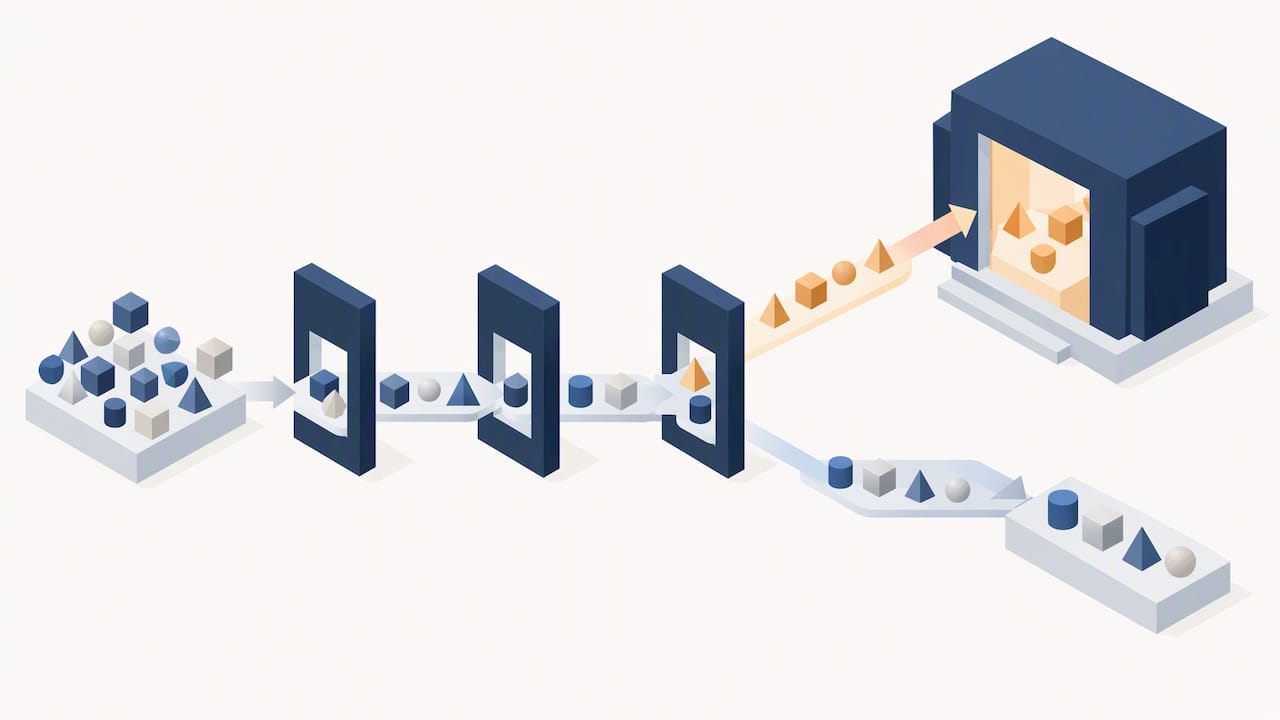
We start every audit with tracking integrity, because a bad conversion signal makes every other decision downstream unreliable. In one account, fixing a duplicate conversion tag corrected inflated conversion counts enough that reported CPC efficiency improved without any bid changes at all.
If your checklist turns up issues beyond quick fixes, a second set of senior eyes on the account structure and attribution setup often finds problems a standard review misses.
— Eric
Sources
- Google Ads costs keep rising, but conversion rates improved in 2025
- Actual cost-per-click (CPC): Definition – Google Ads Help
FAQ
Why is my CPC so high on Google Ads?
High CPC usually comes from auction competition, where your Ad Rank is close to competitors below you, combined with weak quality signals like low CTR or a slow landing page. Pre-auction pressure from shrinking organic click supply also concentrates commercial searches into fewer paid clicks, raising bids across the board.
How much CPC is good for Google Ads?
There is no universal “good” CPC since it depends entirely on your margins and conversion rate. Average CPC across industries reached roughly $5.42 in 2025, but a CPC above or below that average can still be profitable depending on your CPA target.
What is a good target CPA for Google Ads?
A good target CPA is whatever keeps your cost per acquisition below the value a converted customer generates for your business, including margin. There is no fixed industry figure, so calculate it from your own revenue and margin data rather than an external benchmark.
What does it mean when CPC is high?
A high CPC means you are paying more per click because of stronger competition, a less competitive quality score, or both. Google Ads Help notes that actual CPC is tied to the Ad Rank of competitors just below yours, so a high CPC often signals a crowded auction rather than a pricing problem you set yourself.