
A working full-funnel Google Ads system rests on three things: campaigns mapped to specific funnel stages, a conversion signal that survives cookie loss and privacy limits, and a measurement approach that proves which spend actually drives results. Start by auditing your tags and conversion actions, aligning Demand Gen, Performance Max, and Search to the right stage, and turning on enhanced conversions through Data Manager. The payoff is cleaner bidding signal, fewer attribution surprises, and a real read on incrementality.
TL;DR:
- A reliable full-funnel Google Ads system depends on accurate conversion signals that survive privacy changes and proper measurement aligned with each funnel stage.
- Campaign types must match funnel stages: Demand Gen for reach and engagement, Performance Max for cross-channel conversion, and Search for bottom-funnel high-intent queries.
- Offline conversion tracking should be migrated to Data Manager with enhanced conversions to improve data integrity and bidding accuracy.
- Account structure, tagging, and conversion actions require a senior-led audit to eliminate data gaps, fix tagging issues, and ensure proper stage alignment before optimizing bids.
- Running controlled experiments before shifting budgets helps verify incrementality and prioritize stages that truly drive revenue.
Table of Contents
- The three funnel stages and the KPIs that prove they’re working
- Which Google campaign types fit which funnel stage
- Why measurement plumbing decides whether full-funnel bidding works
- The setup checklist: tags, conversions, and account structure
- Optimization tactics that protect signal at every stage
- How to prove incrementality before shifting budget
- How a senior-led audit and rebuild applies these principles
- When a full-funnel rebuild earns its place on the roadmap
- Get a senior-led audit before you rebuild anything
- FAQ
- Sources
The three funnel stages and the KPIs that prove they’re working
Full-funnel Google Ads only works when each stage has a distinct job and its own success metric, rather than everything getting judged on last-click conversions.
Awareness campaigns build reach and should be measured on reach and view-through rate, not purchases. Consideration campaigns earn engagement, engagement rate, and site visits or micro-conversions like add-to-cart or email signup. Conversion campaigns close the loop, measured on qualified leads, sales, and revenue.
- Awareness: track reach and video view rate; expect no direct revenue credit for days or weeks.
- Consideration: track engagement rate and micro-conversions like content downloads or repeat visits.
- Conversion: track qualified leads, converted leads, and revenue, tied back to CRM outcomes where possible.
Upper-funnel activity rarely shows up in last-click reports, but it shows up in branded search. Think with Google found that brands adding lower-funnel tactics to existing awareness and mid-funnel work saw a 20% sales increase, and that adding awareness or lower-funnel efforts to mid-funnel campaigns produced a 52% increase. That lag matters when setting expectations: a YouTube push today can lift branded search volume two or three weeks out, well before it shows up as a tracked conversion.
The handoff rule is simple. Each stage should pass a specific signal to the next: view-through becomes a remarketing audience, engagement becomes a lookalike seed, and only qualified or converted leads should feed back into automated bidding.
Which Google campaign types fit which funnel stage
Matching campaign type to funnel stage keeps budget from leaking into the wrong objective and keeps creative relevant to where someone actually is in their decision, as explained in our Google, Meta & Multi-Channel Paid Advertising services overview.
Demand Gen is built for the top and middle of the funnel. It runs across YouTube, Discover, Gmail, Maps, and the Google Display Network, and it uses AI to serve whichever creative performs best across those discovery-focused surfaces. We treat it as the engine for reach and engagement, feeding well-tested image and video assets into a single campaign rather than fragmenting creative across channels. For a full build-out, our Demand Gen campaign guide covers asset group structure in more detail.
Performance Max sits in the middle to bottom of the funnel, pulling inventory from Search, Display, YouTube, Gmail, and Maps into one conversion-focused campaign. Google’s own product guidance positions it as complementary to Demand Gen rather than a replacement: Demand Gen for curated discovery and creative testing, Performance Max for cross-channel conversion scaling. Our Performance Max campaign guide breaks down asset group composition for teams building this out for the first time.
Search and Shopping remain the bottom-funnel capture tools. Exact and phrase match on branded and high-intent non-branded terms catch demand you already created upstream.
- Demand Gen: reach and engagement, image and video assets, discovery surfaces.
- Performance Max: cross-channel conversion volume once signal is reliable.
- Search and Shopping: exact and phrase match for bottom-funnel, high-intent queries.
- Display and YouTube remarketing: site visitors, CRM matches, and video viewers.
Audience strategy ties it together: CRM customer match lists for exclusion or upsell, site engagement lists for remarketing, and Similar Audiences built from your best converters for mid-funnel prospecting.
Pro Tip: Build your remarketing audiences before you launch Demand Gen, not after. You want a warm pool ready the moment engagement starts flowing in.
Why measurement plumbing decides whether full-funnel bidding works
Stage-mapped campaigns are only as good as the conversion data feeding them. Weak signal means Google’s bidding systems optimize toward noise instead of revenue.
The current priority is migrating offline conversion import to Data Manager, with enhanced conversions for leads replacing legacy offline import by mid-June 2026. Data Manager consolidates first-party data feeds and improves the durability of offline measurement, particularly as cookies and device identifiers become less reliable.
- Capture GCLID (and GBRAID or WBRAID for app and iOS traffic) at the point of form submission, storing it alongside the lead record in your CRM.
- Hash personally identifiable information, such as email and phone, before it’s imported, and confirm consent settings are configured correctly in your tag setup.
- Migrate offline conversion import to Data Manager and enable enhanced conversions for leads so matching happens with hashed first-party data rather than cookies alone.
- Use Lead Journey Mapping to define qualified lead and converted lead goals instead of counting every form fill as a conversion.
Enhanced conversions for leads, done correctly with GCLID capture, improves matching accuracy and reporting durability compared to legacy offline import, according to Google’s own migration guidance. Skipping hashed user data or GCLIDs degrades machine learning bidding performance over time.
Lead Journey Mapping replaces shallow “form submitted” goals with a staged definition of what counts as qualified versus converted, letting Google Ads model your actual sales funnel instead of treating every lead as equal.

For teams with enough volume, unified measurement blends three tools: marketing mix modeling for the long-term baseline and budget allocation, multi-touch attribution for user-level, near-term signal, and geo experiments to calibrate the two against each other. A Think with Google framework recommends nesting brand-equity MMM with MTA specifically to capture both short-term conversion effects and long-term brand contribution, using experiments to reconcile the gap between them. Our attribution models guide walks through how these models differ in practice.
Better signal changes bidding behavior directly. Once qualified-lead data flows cleanly, Smart Bidding shifts budget toward the queries and audiences that actually produce revenue instead of the ones that produce the most form fills.
The setup checklist: tags, conversions, and account structure
Before touching bid strategy, confirm the data plumbing is sound. Most full-funnel underperformance traces back to broken or incomplete tagging rather than bad creative.
- Confirm the Google tag fires on every key page, verified through Google Tag Manager’s preview mode or a server-side container if you’re running one.
- Check that GCLID is captured on form submission and stored with the CRM record, not just logged in analytics.
- Separate conversion actions into primary (used for bidding, like qualified or converted leads) and secondary (observed only, like newsletter signups) during any migration.
- Hash CRM events before import, run a diagnostic comparison between imported and platform-reported conversions, and build a fallback manual upload process for weeks the API import fails.
- Review and prune stale audience lists quarterly so they don’t sit below matching thresholds.
- Naming conventions: stage, campaign type, and audience in the campaign name so reporting doesn’t require guesswork.
- Asset group composition: group by product line or funnel stage, not by arbitrary creative batches.
- Call tracking: connect offline call conversions back to the originating campaign; our call tracking setup guide covers the integration steps.
Optimization tactics that protect signal at every stage
Bidding strategy should follow signal maturity, not calendar dates. A new Demand Gen campaign with no conversion history needs a different approach than a Performance Max campaign with months of qualified-lead data behind it.
Start new campaigns on maximize clicks or maximize conversions with a generous learning budget, then shift to target CPA or target ROAS once you have enough conversion volume for the algorithm to generalize. Moving too early starves the model of the data it needs.
- Refresh Demand Gen creative every two to four weeks to avoid fatigue on high-frequency discovery surfaces.
- Test at least three asset group variations in Performance Max before judging performance.
- Set exclusion windows between remarketing and prospecting audiences so the same user isn’t bid on twice at different funnel stages.
- Cap frequency on Demand Gen and YouTube remarketing to avoid wasted impressions on already-converted users.
Conversion value rules let you tell Smart Bidding which leads matter more, weighting by deal size, customer tier, or margin instead of treating every conversion as equal. Pairing that with offline value mapping, where closed-deal revenue flows back into Google Ads after the sale, keeps bidding aligned with what actually matters to the business rather than just lead volume.
Pro Tip: If two campaigns are bidding on overlapping audiences, you’re not testing two strategies, you’re bidding against yourself. Check audience overlap reports before you diagnose a performance drop as a creative problem.
How to prove incrementality before shifting budget
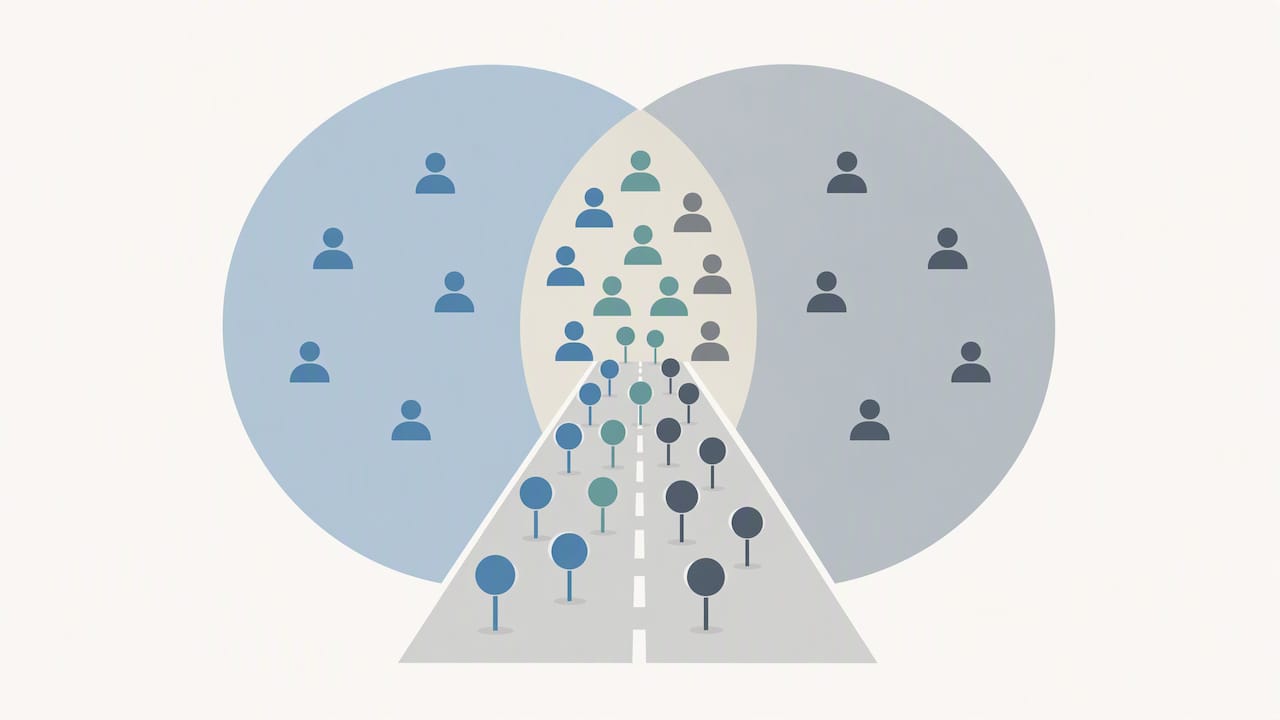
Reliable measurement means nothing if you never test it. Geo experiments split comparable markets into test and control to isolate the lift a campaign actually produces. Conversion lift studies do the same at the user level through randomized ad serving. Holdouts work when you have enough unexposed audience to compare against.
- Run a tag and conversion audit first: confirm GCLID capture, Data Manager setup, and conversion action mapping are all correct.
- Run data sanity checks: compare platform-reported conversions against CRM records for a recent two-week window.
- Run a small, controlled geo experiment or conversion lift study before making any large bid or budget change, giving it enough duration to reach a readable result.
Search Ads Pause studies show paid search clicks are roughly 89% incremental on a weighted average basis, meaning most of that traffic wasn’t going to happen anyway through other channels. That’s a useful baseline when a client asks whether branded search spend is cannibalizing free traffic: often it isn’t. Use the experiment results to decide where budget moves next, shifting toward the stage showing the clearest lift rather than the stage with the most volume.
How a senior-led audit and rebuild applies these principles
Most full-funnel breakdowns we see trace back to the same root causes: conversion actions that were never cleaned up after a platform migration, account structures built years ago that no longer match how the business sells, and attribution reports that don’t match what finance sees in the CRM.
Our approach is senior oversight on every account, documented strategy instead of black-box management, and account ownership that always stays with the client rather than getting locked into an agency’s structure. We build toward CFO-grade attribution, meaning the numbers in the ads dashboard should match the numbers finance trusts.
- Audit every conversion action against CRM records before recommending bid strategy changes.
- Rebuild account architecture around current sales motion, not legacy campaign naming.
- Document the measurement plan in writing so the client can evaluate it independently.
A free Google Ads audit typically surfaces these gaps directly, giving a prioritized list of fixes before any spend changes.
When a full-funnel rebuild earns its place on the roadmap
Not every account needs a rebuild. The clearest signals are a mismatch between reported conversions and CRM data, offline conversion volume that’s grown faster than the tracking setup, GCLID capture that’s incomplete or missing, or attribution reports that keep surprising the people who have to defend the budget.
Spend scale matters too: the more monthly budget riding on Smart Bidding, the more a broken signal costs in wasted spend rather than just reporting confusion.
Early KPIs to watch after a rebuild are conversion action accuracy (does platform data match CRM data within a reasonable margin), cost per qualified lead rather than cost per raw lead, and stability in bid strategy performance over the following four to six weeks as the algorithm relearns on cleaner data.
Fixing it is usually cheaper than the spend it was misallocating.
When measurement is broken, every optimization built on top of it is also broken. Fixing the plumbing before touching bid strategy is the only sequence that holds up.
— Eric
Get a senior-led audit before you rebuild anything
If you’re spending $25,000 or more a month on Google Ads, the fastest path to a working full-funnel system isn’t more campaigns, it’s a clean read on what your current ones are actually doing. We run a free Google Ads audit that checks tag health, conversion mapping, and account architecture against the stage-mapped approach covered above, and hands back a prioritized list of fixes rather than a generic report.

- The audit covers conversion tracking accuracy, account structure, and funnel-stage alignment.
- A pilot engagement typically starts with the highest-impact fixes: conversion signal repair and campaign restructuring.
- Every account keeps senior oversight and written strategy, with account ownership staying with you.
If cross-channel measurement spans ChatGPT Ads as well as Google, our ChatGPT Ads management services cover pixel setup, campaign structure, and cross-channel attribution so both platforms report into the same framework. Start with the Google Ads management page to see the full scope of what a restructure includes.
FAQ
Is $10 a day enough for Google Ads?
A small daily budget can work for narrow, local, or low-competition campaigns, but it rarely generates enough conversion volume for Smart Bidding to learn effectively in competitive categories. Full-funnel strategies, which require signal across multiple campaign types and stages, generally need a larger daily budget to produce usable data within a reasonable testing window.
How much does Google Ads pay per 1,000 views?
Google Ads doesn’t pay advertisers per view; CPM (cost per thousand impressions) is what advertisers pay to show ads, and it varies widely by industry, audience, and format. Publishers earn from Google through separate programs like AdSense, which is a different system from the advertiser-facing Google Ads platform discussed here.
Is funnel marketing outdated?
Funnel marketing isn’t outdated, but a strict linear funnel model is an oversimplification of how people actually move toward a purchase. Think with Google’s research shows combining upper, mid, and lower-funnel tactics produces measurable incremental sales, which is why a full-funnel approach, not the abandonment of funnel thinking, is the current best practice.
What is the 3-3-3 rule for marketing?
Definitions of the 3-3-3 rule vary across marketing sources, and there isn’t a single authoritative definition tied to Google Ads measurement or full-funnel strategy. If you’ve seen it referenced in a specific context, it’s worth confirming the source’s definition directly rather than assuming it applies universally.
What does North Country Consulting’s free Google Ads audit include?
The free audit reviews conversion tracking accuracy, account structure, and funnel-stage alignment, then returns a prioritized list of fixes. It’s built for businesses spending $25,000 or more per month on Google Ads that need a senior-level read on where signal or structure is breaking down.
Sources
- Full-funnel marketing strategy (Think with Google)
- About Demand Gen campaigns (Google Ads Help)
- Unified marketing measurement (Think with Google)