
The Google Ads learning phase is the period after a campaign launches, or after you change an automated bid strategy, when the system calibrates its bids toward your goal. Google’s own guidance says it can take up to around 50 conversion events or about three conversion cycles, and it is often shorter when the account has good historical data. The number of days matters less than how much reliable conversion data you feed the bidder and how long your conversions take to arrive.
This guide explains what the status means, what resets it, how long to wait for each campaign type, and how to evaluate an account while it is learning without panicking or sitting on a real problem.
TL;DR
- The “Learning” status appears after you launch or change an automated bid strategy. Per Google’s help page on learning duration, the campaign needs time to calibrate toward the new goal.
- Google now frames Smart Bidding learning as up to roughly 50 conversions or three conversion cycles. That is an upper benchmark, not a universal minimum.
- Changing conversion goals or actions restarts learning, even when the underlying action is the same. Treat tracking changes as a measurement transition.
- Make one change at a time, define your ramp-up window in advance, and do not judge a result from incomplete data.
- Persistent zero delivery is not “just learning.” If nothing serves after the review and ramp-up windows, diagnose it.
Table of Contents
- What the learning phase actually is
- How long the learning phase lasts
- What triggers learning (and what resets it)
- Why high-spend accounts can learn the wrong thing
- How to run a campaign through learning
- How to test a bid strategy without fooling yourself
- Perspective: what we see in high-spend accounts
- Signs the problem is not learning
- When to bring in a second pair of eyes
- FAQ
- Sources
What the learning phase actually is
When you set up Smart Bidding (Target CPA, Target ROAS, Maximize Conversions, Maximize Conversion Value), Google predicts the likelihood that each auction produces a conversion and adjusts the bid accordingly. A new strategy has no history with your current goal, so it has to gather signal first. Google flags this with a “Learning” bid strategy status. See Google’s documentation on learning duration for the official definition.
In practice you will see some or all of these during learning:
- Spend that swings up and down from day to day.
- Cost per conversion or ROAS that is noisier than usual.
- Impression share that moves without any change from you.
That volatility is expected. It is not automatically evidence that something is wrong, and it is not evidence that things are fine either. The status describes the bidder’s calibration, not your business outcome.
Two clarifications that save a lot of confusion:
- Manual CPC does not use the learning-period status. The label is about automated bidding.
- The label disappearing is not a finish line. Google’s algorithms keep learning after the status clears, so stability should be judged by conversion volume, conversion lag and business-quality outcomes, not by the badge alone.
How long the learning phase lasts
The honest answer is “it depends on three things”: conversion volume, conversion cycle length and bid strategy.
Conversion volume
More conversions per day means the bidder has more evidence per day. Google’s current wording uses up to around 50 conversion events or three conversion cycles as the upper calibration benchmark, and notes it can be faster when historical conversion data exists. Older guidance described one to two conversion cycles as typical. Both are guideposts, not guarantees.
Conversion cycle length
A conversion cycle is how long it typically takes a click to turn into a conversion. An e-commerce store selling a $40 item might have a cycle of a day or two. A B2B SaaS company with a 45-day sales process has a very different clock. If most conversions land weeks after the click, the bidder simply cannot see results quickly, and “three cycles” could be months.
Bid strategy and campaign type
Different campaign types carry different published expectations:
| Campaign type | What Google says | Source |
|---|---|---|
| Smart Bidding (general) | Up to around 50 conversion events or 3 conversion cycles; faster with historical data | Google Ads Help |
| New Performance Max | Initial data in 24 to 48 hours; automated-bidding learning typically 1 to 2 weeks, sometimes up to 6 weeks | Create a Performance Max campaign |
| Performance Max, low or no traffic | Allow 7 to 14 days to ramp up; ad review takes 24 to 48 hours | Performance Max troubleshooting |
| Demand Gen | Around 50 conversion events before bidding changes; at least 24 hours for ad review | Create a Demand Gen campaign |
| After conversion goal or action changes | Typically 1 to 2 conversion cycles | Changing conversion goals |
Note the Demand Gen figure is a practical benchmark. It is not proof that every account needs exactly 50 events before you can evaluate performance.
What triggers learning (and what resets it)
The most common triggers are the ones people do not think of as “big” changes.
- Launching a campaign on an automated bid strategy.
- Switching bid strategies, for example from Maximize Conversions to Target CPA.
- Changing conversion goals or conversion actions. Google states that Smart Bidding needs one to two conversion cycles after any change to goals or actions, including changing the selected goal when the underlying action stays the same.
- Large changes to budget, targets or targeting. Google specifically warns against frequent or large changes while Performance Max is learning.
- Editing ads, which sends them back through policy review for generally one to two days.
The pattern is simple: anything that changes what the bidder is optimizing toward, or the signal it receives, starts a calibration period. Small bid adjustments to a stable campaign are far less disruptive than changing the goal.
Tracking changes are the sneaky one
Many teams fix their tracking, see the campaign go back into learning and conclude the fix broke something. Usually the opposite is true: the bidder is recalibrating to better data. Google’s guidance says a tracking or attribution rebuild should be treated as a measurement transition, not judged immediately as a campaign failure or success. Plan these changes, and confirm budgets are set to the intended spend before you make them.
If you are still building your setup, our walkthrough on setting up Google Ads conversion tracking properly covers what to verify first, and our piece on tracking offline conversions matters if revenue is closed by phone or in a CRM.
Why high-spend accounts can learn the wrong thing
Smart Bidding optimizes toward the signal you give it. It does not know your margins, your sales team’s close rate or which leads are junk. If you promote an unqualified action to primary status, the system can learn successfully while your business results get worse.
This matters most for B2B lead generation. Suppose a SaaS company counts every demo-request form fill as a primary conversion. Half of those might be students, vendors or tire-kickers. The bidder will happily find more people who fill out forms. The learning label clears, cost per lead looks great, and the pipeline starves.
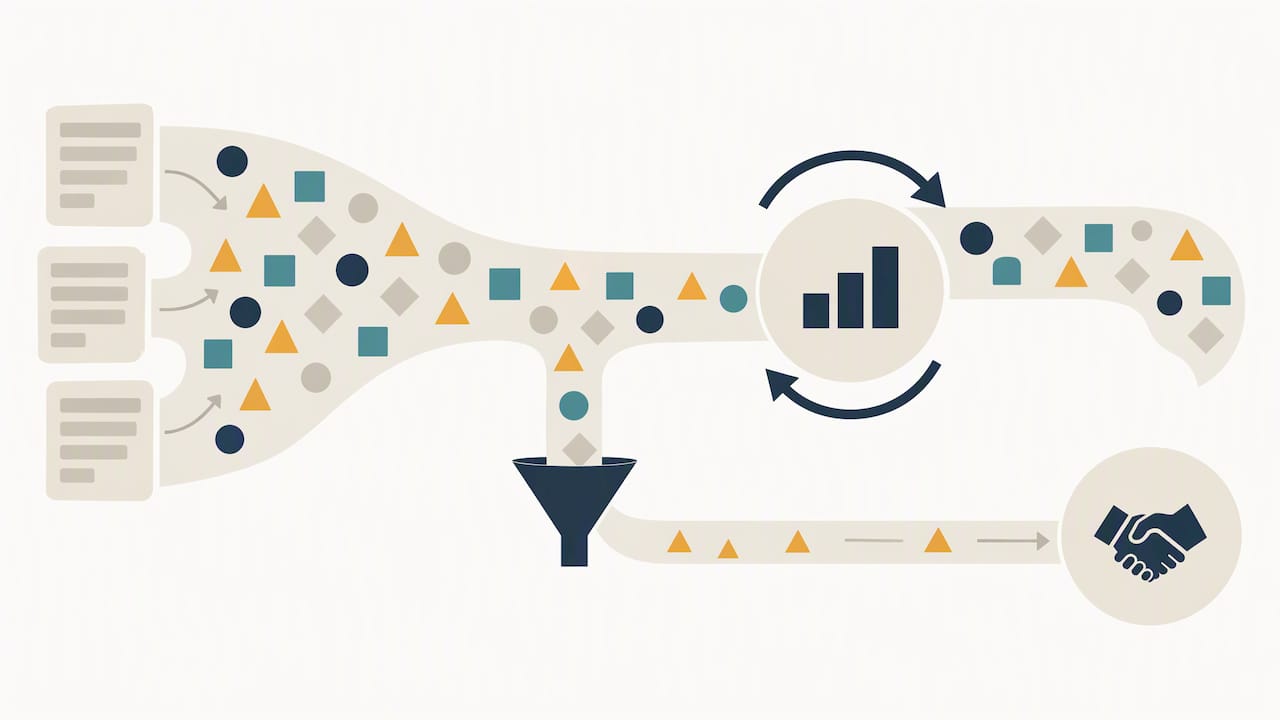
The fix is to separate low-intent form fills from qualified opportunities before making the new goal primary. Choosing business-relevant lead conversion signals is as much a sales-process question as a Google Ads one. We go deeper on the mechanics in our guide to Google Ads lead qualification.
A useful way to think about it: the learning phase is only as good as the finish line you drew for it.
How to run a campaign through learning
Here is the sequence we would follow for a campaign at meaningful spend.
- Audit the signal first. Before launching or changing a strategy, confirm the primary conversions represent real business value, that tags fire once, and that values are accurate. A bad signal turns learning into expensive learning.
- Set the budget to the intended spend. Starving a campaign during calibration slows data collection and muddies the results.
- Write down the ramp-up window. Use the longer of two weeks or three conversion cycles as a starting point, in line with Google’s test guidance. For a long B2B cycle, lengthen it.
- Change one variable at a time. Changing bidding, budgets, creative and targeting together makes the result uninterpretable.
- Exclude recent days with incomplete data. When fewer than 90% of conversions have reported because of conversion delay, Google recommends leaving those days out of the evaluation.
- Evaluate on business outcomes. Look at qualified pipeline, margin or revenue, not only the status label or in-platform cost per conversion.
A worked example
Say an e-commerce brand has 20 conversions a day and a conversion cycle of two days. A switch to Target ROAS is likely to calibrate much faster than the same switch for a B2B account with 15 conversions a month and a 60-day cycle. The e-commerce account could reasonably look at results after a couple of weeks. The B2B account may need to define an earlier proxy, such as a qualified-lead event, and still wait through several cycles before drawing conclusions. The same “Learning” badge means two very different calendars.

How to test a bid strategy without fooling yourself
Google’s bid strategy test guidance is a good governance model for any CEO or CMO asking an agency “is this working?”:
- Test on an established campaign with roughly at least 30 conversions in the last 30 days.
- Allow two weeks or three conversion cycles to ramp up, whichever is longer.
- Then run at least 30 additional days uninterrupted.
- Isolate the variable, and define the timeline before you start.
This is a stronger accountability framework than reporting an early post-change ROAS snapshot. If someone shows you a screenshot from day four and declares victory or failure, ask what the ramp-up window was and how much conversion lag was excluded.
For background on how the bidder reasons about auctions, see our explainer on how Smart Bidding actually works, and our overview of Smart Bidding strategies if you are choosing between them.
Perspective: what we see in high-spend accounts
We manage Google Ads for businesses spending $25,000 or more per month, and the learning phase is one of the most misused concepts in those conversations. Two failure modes show up again and again.
The first is impatience. An account is restructured or a goal is changed, performance dips for a week, and someone reverses everything. That restarts learning and guarantees the account never stabilizes. Every reversal resets the clock.
The second is passivity. A campaign sits at low spend or zero delivery well past the review and ramp-up windows, and the explanation offered is “it’s still learning.” Google’s own guidance says that if a Performance Max campaign shows no impressions after three business days, you investigate. You check policy review, conversion goals, budget, targeting and bidding limits instead of assuming the campaign is merely learning.
What separates the two is a written plan. Before we change a strategy, we define what we are changing, what we expect to see, how long the ramp-up is given the account’s conversion cycle, and which business metric decides the outcome. Senior people review that plan, because the decisions that matter here are judgment calls, not button clicks. We also rebuild tracking and attribution when the signal is the real problem, since heavy spend with poor tracking leaves an account operationally uncertain no matter what the status says.
The learning label is a diagnostic input. It is never the answer to “is my money working?”
— Eric
Signs the problem is not learning
Waiting is correct only when the cause is calibration. Look harder when you see:
- No impressions after the stated windows. Ad review takes 24 to 48 hours, and Google suggests investigating a Performance Max campaign with no impressions after three business days.
- Missing or broken conversion goals. The bidder cannot learn from events it never receives.
- A budget far below what the target demands. Tight CPA or ROAS targets plus a thin budget can throttle delivery indefinitely.
- Disapproved ads or limited policy status.
- Conversions that look strong but do not match revenue or pipeline. This points to a signal quality problem, not a learning problem.
If several of these apply, a structural review of the account beats another week of waiting. Seasonal swings can also look like learning noise, so factor in seasonality adjustments when judging timing.
When to bring in a second pair of eyes
If you spend $25,000 or more per month and your account keeps cycling in and out of learning, with no clear owner of the measurement plan, that is the moment for a structured review. We offer a free Google Ads audit that looks at campaign architecture, conversion tracking and reporting, and points to where revenue is leaking. If you want senior operators running the account day to day, see our Google Ads management approach. Account ownership stays with you either way.
FAQ
How long does the Google Ads learning phase last?
Google describes Smart Bidding learning as taking up to around 50 conversion events or three conversion cycles, and it can be quicker when historical data exists. For a new Performance Max campaign, Google says automated-bidding learning typically takes one to two weeks and sometimes up to six. Low conversion volume or long sales cycles stretch these timelines.
Can I make changes while a campaign is learning?
You can, but each significant change can restart calibration and make results hard to interpret. Google recommends changing one variable at a time and avoiding frequent or drastic changes to budget, bidding or targeting. Fix clear errors such as broken tracking or disapproved ads right away, then let the campaign settle.
Does changing my conversion goal restart learning?
Yes. Google states that Smart Bidding generally needs one to two conversion cycles after changes to conversion goals or actions, including switching the selected goal when the underlying action is unchanged. Confirm the budget reflects your intended spend and that the new primary conversions carry real business value before you switch.
My campaign is stuck in learning. What should I check?
Start with conversion volume and delay: too few conversions or a long cycle keeps the status on longer. Then check for frequent edits that keep resetting the clock, broken or low-quality conversion goals, restrictive targets and budget limits. If a Performance Max campaign has no impressions after three business days, review policy status and settings rather than waiting.
Does the learning phase end when the label disappears?
No. Google says its algorithms continue to learn after the “Learning” status clears. Judge stability by conversion volume, conversion lag and business outcomes like qualified pipeline or margin, not by the label alone.
Sources
- Duration of the learning period for campaigns and what affects it, Google Ads Help
- Google Ads reframes Smart Bidding learning around 50 conversions, Search Engine Land
- Create a Performance Max campaign, Google Ads Help
- How to fix Performance Max not running or low traffic, Google Ads Help
- Create a Demand Gen campaign, Google Ads Help
- Changing conversion goals and actions used for Smart Bidding, Google Ads Help
- Test your bid strategy, Google Ads Help